The first whisky that really landed for us was a Lagavulin 16 from Islay: coastal, gently smoked, unmistakably from one specific place. The second was a Glenallachie 12 from Speyside. Sitting the two side by side, the penny dropped. This was not one drink with minor variations. These were two different worlds sharing a name.
That contrast is the whole story of whisky. The different types of whisky are separated by far more than geography, and once you learn to read what divides them, a shelf of unfamiliar bottles turns into a map you can navigate.
The short version “Whisky” covers a family of grain spirits that vary enormously depending on where and how they are made. The main categories are Scotch (split across five regions), Irish whiskey, American whiskey (mostly bourbon and rye), Japanese whisky, Indian single malt, Nordic whisky and a fast-rising English scene, with emerging names from Taiwan, Australia and New Zealand. What separates them comes down to four things: the grain, the climate, the local law and production method, and the cask. Learn to read those four, and every bottle starts to make sense.
Whisky or whiskey? The spelling is your first clue
Scotland, Japan, Canada, India and most of Europe spell it “whisky” without an e. Ireland and the United States generally use “whiskey” with an e. It is a convention rather than a law, but it is a reliable first hint about where a bottle comes from and, often, how it will drink.
Scotch whisky: five regions, five moods
Scotch is where most people start, and it divides into five recognised regions: Lowland, Highland, Speyside, Islay and Campbeltown. By law, Scotch matures at least three years in oak casks in Scotland and bottles at a minimum of 40% ABV.
The regional shorthand is useful, but it is not a rulebook. Islay gets talked about as “the smoky one,” and the coastal peat of a Lagavulin or a Laphroaig earns that reputation. What surprised us most, though, was how much range one small island actually holds. Several Islay distilleries make little or no peated spirit, and the nuances across the island go far beyond its smoky postcard image.
Head north into the Highlands and you find a distillery like Clynelish known for a waxy, almost candle-like texture that has nothing to do with smoke at all. Speyside, the most densely packed whisky region on earth, leans toward orchard fruit and the dried-fruit sweetness that comes from sherry cask maturation. Lowland tends lighter and grassier, Campbeltown briny and full-bodied. Five regions, five honest starting points.
Copper pot stills inside InchDairnie Distillery in Fife, Scotland.
Irish whiskey: triple distillation and the pot still signature
Ireland spells it “whiskey,” and its calling card is a softer, rounder style. Irish whiskey is typically distilled two or three times, and that extra pass strips out heavier notes and leaves something gentle and approachable.
Single pot still is the style that best shows what Ireland can do that nobody else can. Made from a mix of malted and unmalted barley in a pot still, it carries a creamy, spicy weight all its own.
A bottle that changed our view of Irish whiskey It took a single pot still dram in Dublin to reset our expectations. Irish whiskey gets filed as the easy, approachable one, and plenty of it is. But pot still, made from malted and unmalted barley and run through the still two or three times, has real texture: creamy and peppery, with a green, spicy backbone you do not get from Scotch. That was the glass that made Irish whiskey click for us.
Teeling Whiskey copper pot stills and spirit safe under the phoenix logo, Dublin distillery
American whiskey: bourbon, rye and the weight of the cask
The US mostly writes “whiskey,” and its two headline styles are legally defined. Bourbon must be at least 51% corn and aged in new charred oak barrels, which is exactly where all that vanilla, caramel and coconut comes from. Rye must be at least 51% rye, giving a drier, spicier, more peppery profile. Note the measurement convention too: the US labels in proof (twice the ABV), Europe in ABV.
Bourbon is enormous at home and comparatively under-explored in Europe, where single malt still dominates the shelves. It rewards crossing over for. American producers also talk more openly than most about warehouse placement: where a barrel sits in the rickhouse, how high, how close to the wall, and how much that changes the whiskey over years. Which is a neat way into the single biggest hidden variable in all of whisky.
What climate does: angel’s share and where a cask sleeps
Every year in the barrel, whisky loses volume to evaporation, the angel’s share. In cool, damp Scotland that might be around 2% a year. Move the same cask to a warm climate and it accelerates dramatically. Where the warehouse sits, by the sea or inland, and even where inside the warehouse a cask rests, all leave a mark on how the spirit matures. It is one of the reasons you cannot judge a whisky on age alone.
Whisky casks stacked inside the warehouse at Stauning Whisky in Denmark.
Indian single malt: tropical maturation, its own language
India is the clearest example of climate rewriting the rules. In the tropical heat, whisky matures fast and the angel’s share is punishing, so a young Indian single malt can carry the depth of a much older Scotch. We first got into it at The Whisky Show, tasting Indri and Rampur, and it opened up a set of flavours that simply do not have a Scottish equivalent. Distilleries like Amrut and Paul John have carried that further.
What we taste in Indian single malt Ripe tropical fruit leads: mango, papaya, sometimes overripe banana, wrapped in honey and warm baking spice. Underneath sits a deep, fast-drawn oak that only serious heat produces. The peated Indian releases are their own thing too, a rounder, earthier smoke that sits nothing like Islay. This is not Scotch with a different postcode. It is its own language.
Japanese whisky: from imitation to identity
For years Japanese whisky openly modelled itself on Scotch, chasing similar profiles with Japanese precision. The shift in recent times has been a move away from copying and toward putting the quality of the craft itself front and centre. Worth knowing: Japan tightened its labelling rules in 2021, so some products that once traded on a Japanese image no longer qualify as Japanese whisky.
Nordic whisky: our home ground
This one is close to home for us. The Nordic countries have gone from curiosity to serious contender, and several producers have won international awards. The ones we know best each have their own reach: Copenhagen Whisky has built a strong name in Asia, while Stauning and Thy are better known here in Europe, particularly in Germany and France. What they share is an approach. Rather than copy the Scottish playbook, they lean into a distinctly Nordic style.
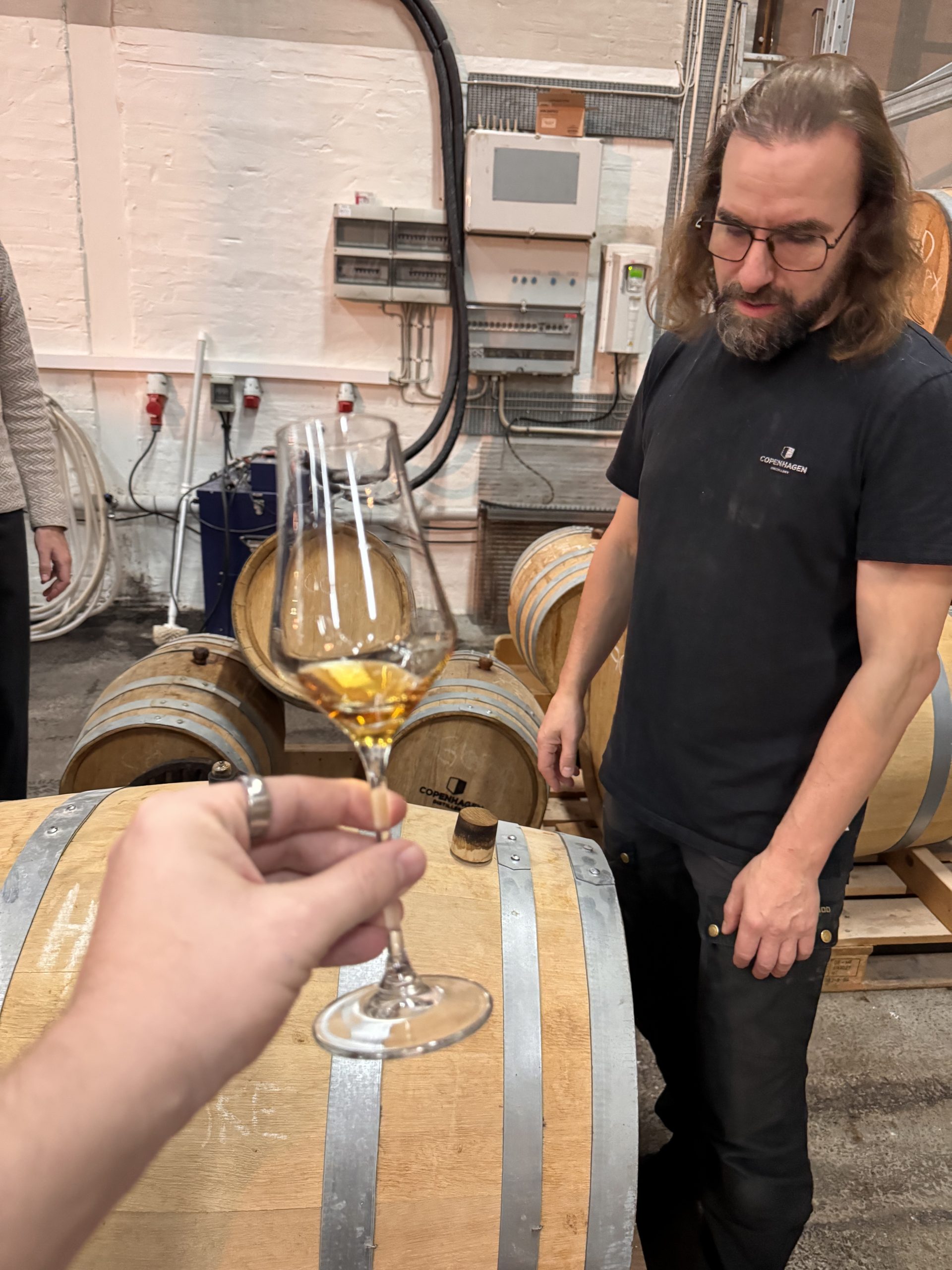
What surprised us about Nordic whisky How completely it has stopped apologising for not being Scotch. The best Nordic distilleries are not making budget stand-ins; they are making something with its own character, from local grain, local climate and their own ideas about cask. Standing in the warehouses at Stauning, Thy and Copenhagen, what struck us was the confidence. This is a region writing its own rules, and the rest of the world is starting to pour it.
English whisky: the category on the rise
If we had to name the most underrated whisky-making nation right now, it would be England. Long overshadowed by Scotland next door, the English scene has grown fast, with more than 60 distilleries now laying down spirit and English single malts named World’s Best Single Malt at the World Whiskies Awards more than once in recent years. The category is even on the verge of its own legal protection, which would place English whisky alongside Scotch, Welsh and Northern Irish whisky. A world on the way up, and very much one to watch.
The wider world: Taiwan, Australia and beyond
Beyond the big names, Taiwan (where a warm climate again speeds maturation), Australia and New Zealand are all producing whisky worth seeking out. The map keeps getting bigger, which is exactly what makes this such a good time to be curious.
What actually makes them different: grain, climate, law and cask
Strip away the marketing and four levers explain almost every difference between these whiskies.
Grain sets the base note: barley for most single malts, corn for bourbon’s sweetness, rye for its spice, and mixed mash bills for pot still and grain whiskies.
Climate controls the pace of maturation, because the angel’s share and warehouse conditions do very different things in Speyside than they do in Goa or Taiwan.
Law and production method draw the lines: how many times the spirit is distilled, how long it must age, and what it can legally be called.
Cask does the rest, and it does a great deal. Whether spirit rests in an ex-bourbon barrel, a PX or Oloroso sherry butt, a Moscatel cask, a port pipe or something more unusual can shape a whisky more than almost anything else in the process.
Category
Typical grain
Distillation
Signature character
Scotch single malt
Malted barley
Usually twice
Regional: smoke, fruit, sherry, wax
Irish
Barley, malted and unmalted
Two to three times
Soft, round, creamy pot still spice
Bourbon
Min 51% corn
Column and pot
Vanilla, caramel, coconut
Rye
Min 51% rye
Column and pot
Dry, peppery, spicy
Japanese
Malted barley
Usually twice
Precise, balanced, refined
Indian single malt
Malted barley
Usually twice
Tropical fruit, honey, fast oak
Nordic
Barley, rye, local grain
Varies
Local, characterful, non-Scotch
English
Malt and grain
Varies
Fast-growing, varied, modern
Single malt, blended, bourbon, rye: what the labels really mean
The terms trip up new drinkers more than the flavours do. Single malt means 100% malted barley from a single distillery; it does not mean single cask, and it is not automatically “better” than a blend. Blended whisky mixes malt and grain whiskies, and a good blend is a craft in its own right, not a lesser product. Bourbon and rye are defined by their grain bills, not by a region. Get those four straight and most whisky labels stop being intimidating.
Our best advice: drink outside what you know
Here is what new drinkers get wrong most often. They lock onto the two or three whiskies they already know and stop there. The whole pleasure of this category is its range, from an Indian peated malt to a waxy Highlander to a rye that bites. Our advice never changes: be willing to reach for the bottle you have not tried yet. That is almost always where the next favourite is hiding.
Frequently asked questions
How many types of whisky are there? There is no single official count, but the main categories by origin are Scotch (itself split into five regions), Irish whiskey, American whiskey (mainly bourbon and rye), Japanese whisky, Indian single malt, Nordic whisky and English whisky, plus growing scenes in Taiwan, Australia and New Zealand. Within each, styles vary by grain, cask and age.
What is the difference between whisky and whiskey? It is mostly a spelling convention tied to origin. Scotland, Japan, Canada, India and most of Europe use “whisky” without an e. Ireland and the United States generally use “whiskey” with an e. The spelling does not guarantee a style, but it is a reliable first clue to where a bottle comes from.
What is the difference between Scotch and bourbon? Scotch is made mainly from malted barley, matured at least three years in oak in Scotland, and often carries regional character from smoke to sherry sweetness. Bourbon is an American whiskey made from at least 51% corn and aged in new charred oak, which gives its signature vanilla, caramel and sweetness. Different grain, different casks, different rules.
Which type of whisky is best for beginners? There is no single right answer, but softer styles are an easy entry point: many Speyside single malts and triple-distilled Irish whiskeys are gentle and approachable. That said, the best beginner whisky is the one that makes you curious. Taste widely across regions and countries before you decide what you like.
Why does Indian whisky taste different from Scotch? Climate. India’s tropical heat matures whisky far faster than Scotland’s cool, damp air, drawing more from the cask in fewer years and losing more to evaporation. The result is a bolder, often sweeter profile with ripe tropical fruit and deep oak, a character that has no direct Scottish equivalent.
Is single malt better than blended whisky? No. Single malt means the whisky comes from one distillery and is made entirely from malted barley; blended whisky combines malt and grain whiskies, often from several distilleries. Both can be excellent. A well-made blend is a skilled piece of work, and “single malt” describes production, not a guarantee of quality.
Whisky is made from three things: water, barley and yeast. That is it. The first time we stood inside a working distillery and really understood that, it stopped us in our tracks. Something this layered, this expensive, this slow, and the raw shopping list is shorter than a loaf of bread. What turns those three […]
Indian whisky matures faster than Scotch for one reason: heat. Indian whisky matures roughly three to four times faster than Scotch overall, and in Scotland a cask loses about 2% of its contents to evaporation each year. In India that figure, known as the angel’s share, runs at 8 to 12%. The high temperatures drive […]
Scotch whisky is whisky made and matured in Scotland for at least three years in oak casks, distilled below 94.8% ABV and bottled at a minimum of 40%. By law it can contain only water, malted barley (with other cereals allowed for grain whisky), yeast, and plain caramel for colour. That is the definition on […]
[…] burnished amber and deep mahogany come purely from the wood. For anyone who has read our guide to whisky cask types, this is the theory poured into three […]


Leave a Reply