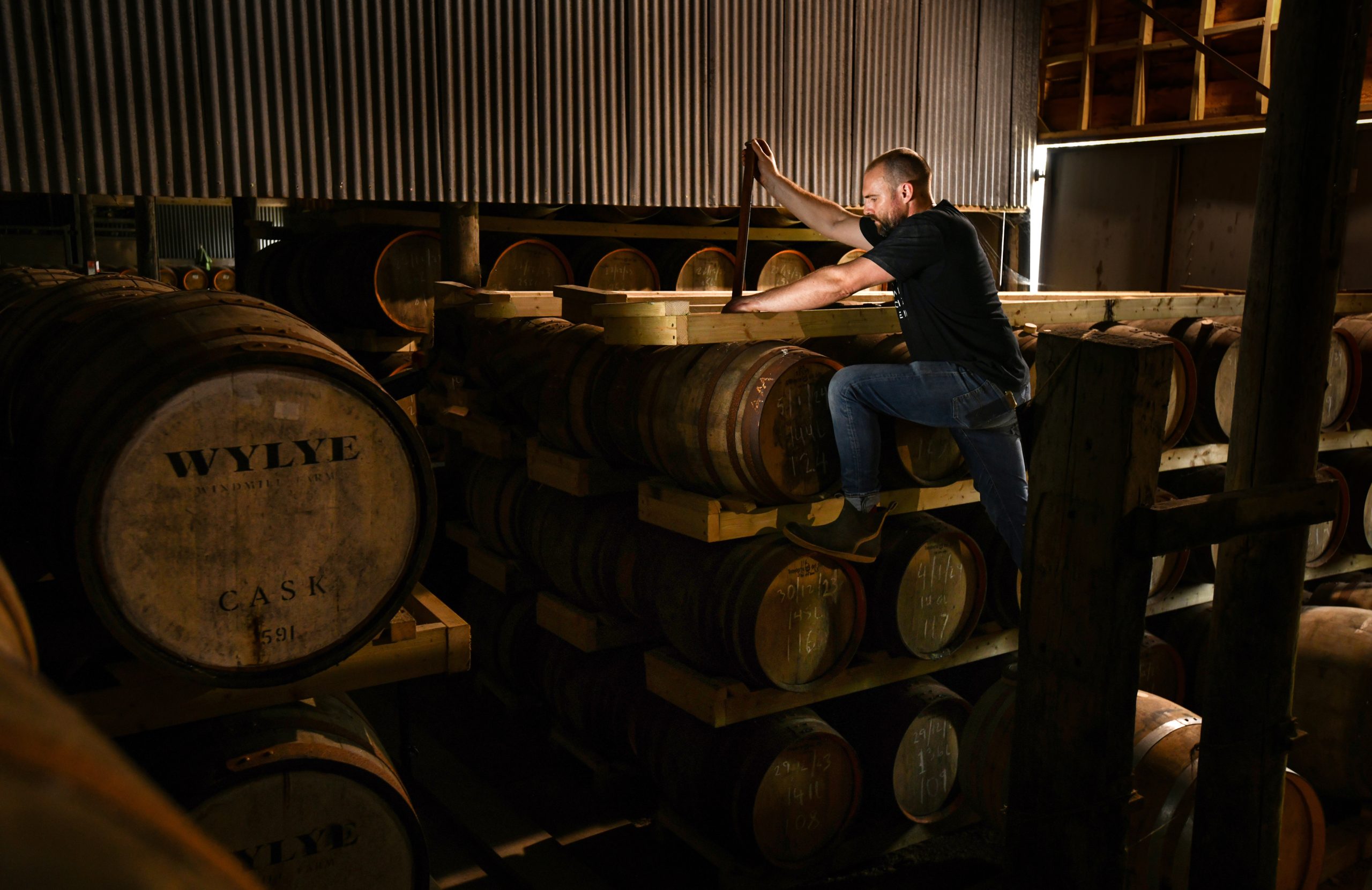
Wylye Distillery is a single malt distillery at Windmill Farm in the Wylye Valley, Wiltshire, run entirely by owner and distiller Sam Barber. Production began in July 2023, and Sam has quietly laid down well over 1,000 casks of unpeated English single malt. As of August 2026 there is nothing to buy: the first casks have only just turned three, and Sam is holding them back to let the whisky develop. Instead, he is opening Windmill Farm to trade, media and private guests by appointment, sharing early drams and the story of how Wylye is made.
A distillery that has been hiding in plain sight
Wylye has spent three years doing something unusual for a young single malt: staying quiet. Since July 2023, Sam Barber has been mashing, distilling and maturing at Windmill Farm, in the ancient village of Wylye, and has filled well over 1,000 casks. Most of the whisky world had no idea.
We only registered how long Wylye already was when the name here in August. That is more or less the point Sam makes with his own press release, borrowed for the headline above: hidden in plain sight.
There is no fanfare here, no NAS launch bottle rushed out at year three, no cask investment scheme. Just one person, a repurposed farmyard, and a warehouse quietly filling up.
What is Wylye Distillery?
Wylye is a farm distillery set across four repurposed buildings at Windmill Farm, surrounded by rolling hills in an Area of Outstanding Natural Beauty. It makes unpeated single malt, and it does everything in one place: mashing, fermentation, distillation and maturation all happen on site, drawing on the farm’s own water source. Sam Barber owns it, distils it, and for now runs it alone. Production runs at around 45,000 litres of pure alcohol a year.

It sits inside a category that has grown up fast. England now has more than 60 distilleries laying down whisky, and English whisky is edging toward its own protected Geographical Indication. Under the proposed definition, single malt English whisky would need to be distilled at a single English distillery from malted barley in copper pot stills, which is exactly how Wylye works. The GI was still in its final stages at the time of writing, but the direction of travel is clear, and Wylye is a textbook example of the single-site, single-distillery approach at the heart of it.
From valley to glass, all in one place
The Wylye Valley does a lot of the work before Sam does. Water is filtered through a chalk aquifer, and the barley comes from a single named source: Manor Farm, worked by Henry Collins and established by his grandfather in 1913. The variety is Laureate, grown on shallow soil over chalk, then sent the short distance to Warminster Maltings.
Warminster is worth knowing about. Built in 1855, it is Britain’s oldest working floor maltings, and it sits just ten miles from Wylye in a town that counted 36 malthouses back in 1720. Using a traditional floor maltings a short drive away, rather than industrial malt shipped in, is part of what gives Wylye its sense of place.
That single-site logic runs through the whole operation. Sam wanted somewhere he could brew, distil, mature and eventually bottle without the spirit ever leaving the farm, and Windmill Farm gave him exactly that.
How Wylye makes its spirit
The Haybarn holds the production kit: a half tonne semi-lauter mash tun, five jacketed washbacks, and two traditional Forsyths copper pot stills. Sam runs off a slightly cloudy wort, pitches distiller’s yeast, and lets it go through a long, temperature-controlled fermentation. Weak wort is collected and reused as the first water in the next mash, an efficient, old-fashioned touch.
Distillation is a balanced double distillation with a slow spirit-still run, steam regulated to promote copper contact. The vapour rises through a long swan neck and an upward-sloping lye pipe before hitting a shell-and-tube condenser. What lands in the safe, in the distillery’s own words, is a malty spirit with notes of orchard fruit.
The through-line is consistency. Sam keeps his brewing and distillation parameters tight so that his new make is a reliable, known quantity, on the logic that once the bung goes in, maturation takes over and the distiller loses control. If you want to read what the wood is doing, you need a steady starting point.

The cask programme is where Wylye shows its hand
If the new make is deliberately consistent, the maturation is where Wylye gets interesting, and it tells you what Sam actually cares about.
Casks rest in the Cowsheds, an old tin-roof pole barn that leans into the valley’s seasonal swings, from below freezing in winter to the high thirties Celsius in summer. The 6,000 square foot, L-shaped building is split into four bays with real climatic variation: some casks face south and feel the sun on their backs, others sit in cooler, more humid spots with different air circulation. Everything is stacked dunnage style.
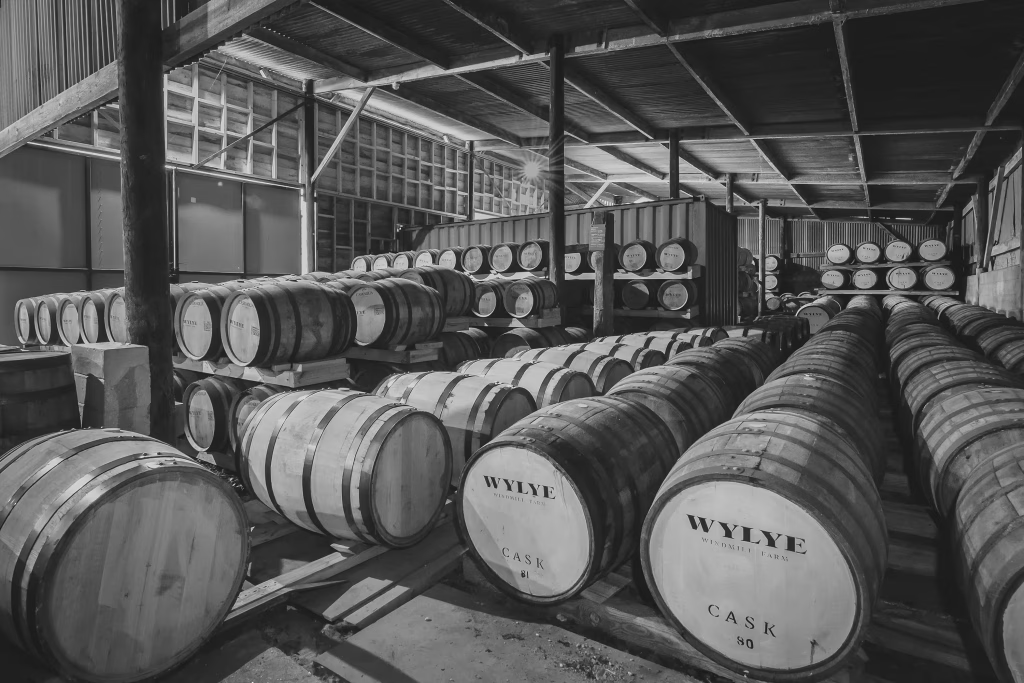
There is no finishing here. Sam fills everything for full-term maturation, which keeps his options open for vatting later rather than committing to short finishes now. Ex-bourbon is the bedrock of the warehouse, chosen to show the new make in its most expressive form, but the wood list is broad. Sourced from three cooperages, it includes ex-bourbon and virgin oak from Kelvin Cooperage in Kentucky, plus tawny port, Douro red wine and other speciality casks from J. Dias in Porto. On top of that, Wylye runs a seasoning programme with Casknolia and the wineries Robles in Montilla-Moriles and Xeranthia in Jerez-Xérès-Sherry, filling casks with everything from Pedro Ximénez to Palo Cortado across American, Spanish and French oak.
The most telling detail: some casks are already set aside for 15 and 21 year old releases. That is not the behaviour of a distillery in a hurry. It is someone laying down a library and giving himself decades of vatting choices down the line.
Why Sam Barber is not bottling yet
Sam is clear that this reveal is not a launch. In his words: “The first bourbon barrels I laid down in July 2023 have now turned three. Having spent more time with these vessels than my family, often to the latter’s relief, I’ve become quite attached and it won’t be easy letting them go. But I also want to give my whisky a chance to evolve and reach its full potential, so I won’t be bottling just yet. It is, however, time to start letting drinkers know what I’ve been up to, sharing a few drams of Wylye, and allowing people to experience what makes Windmill Farm such a special place to make single malt.”
Read alongside the cask programme, the patience makes sense. The whole point of Wylye, for Sam, is the story of the liquid he has laid down, and he would rather tell it properly than cash in at three years old. Keeping quiet until now was part of that. So is holding the casks back a little longer.
Visiting Windmill Farm
The Dairy has been restored into Wylye’s blending, tasting and dining rooms, with a bespoke bar, a log burner, cosy interiors and a growing library of books on wine, beer and spirits, alongside a vatting lab and a drinks terrace. It is set up to host trade, media and private guests who want to sample early Wylye and see how the farm works.
One practical note: because Sam runs the distillery single-handed, visits are strictly by appointment. Enquiries go to info@wylyedistillery.com, and you can follow progress on Instagram at @wylyedistillery or register your interest at wylyedistillery.com.
What we make of Wylye
There is nothing to score here yet, and we would not pretend otherwise. What we can say is that this is a serious, single-site English single malt with a genuinely considered cask programme and a long-term plan already written into the warehouse. A one-person operation that has quietly reached 1,000-plus casks, sources barley from one named farm, malts at Britain’s oldest floor maltings, and has 15 and 21 year old casks earmarked before it has sold a single bottle, is doing this the patient way.
The honest verdict, then, is about intent rather than liquid, and the intent is impressive. What we will be watching for is the first bottling, whenever Sam decides it is ready, and the vatting choices that all this full-term wood is building toward. On the strength of the story so far, we are looking forward to the day Wylye finally lets a bottle out of the valley.
Frequently asked questions
What is Wylye Distillery? Wylye Distillery is a single malt whisky distillery at Windmill Farm in the Wylye Valley, Wiltshire, England. It is owned and run by distiller Sam Barber, who makes unpeated English single malt across four repurposed farm buildings. Production started in July 2023, with over 1,000 casks now maturing on site.
Where is Wylye Distillery? Wylye Distillery is based at Windmill Farm in the ancient village of Wylye, in the Wylye Valley, Wiltshire, within an Area of Outstanding Natural Beauty. Barley comes from nearby Manor Farm and is malted ten miles away at Warminster Maltings, Britain’s oldest working floor maltings, so the whole process stays local.
Can you buy Wylye whisky yet? No. As of August 2026, Wylye has not released any bottlings. The first casks, filled in July 2023, have only just turned three years old, and Sam Barber is holding them back to mature further. For now, the only way to taste Wylye is at Windmill Farm by appointment. Follow @wylyedistillery for release news.
Who is Sam Barber? Sam Barber is the owner and distiller of Wylye Distillery, which he runs single-handedly. He grew from a whisky enthusiast into a maker, and built Wylye at Windmill Farm with the stated aim of creating a single malt distillery in the Wylye Valley that becomes a home for whisky drinkers around the world.
What casks does Wylye use? Ex-bourbon is the backbone of Wylye’s warehouse, chosen to show the new make clearly. Sam also uses virgin oak, tawny port, Douro red wine and speciality casks, plus a seasoning programme filling American, Spanish and French oak with fortified wines from Pedro Ximénez to Palo Cortado. Everything is full-term matured, with no finishing.
Can you visit Wylye Distillery? Yes, but only by appointment, because Sam Barber runs the distillery alone. The restored Dairy houses tasting and dining rooms, a bespoke bar and a drinks library, and hosts trade, media and private guests who want to sample early Wylye. Enquiries go to info@wylyedistillery.com.
Leave a Reply